How Hypnosis Got a Bad Reputation
Chel Hamilton
3 min read


Probably not.
So is it any wonder hypnosis had such a bad reputation way back then?
It was until the 1950′s…
…and the arrival on the psychiatric scene of Dr. Milton Erickson, that things started to change around this "hypnosis" idea.
Dr. Erickson was a soft spoken man, confined to a wheelchair due to having having had polio as a child. And while the combination was probably perfectly suited for helping people feel safe enough to relax into a trance, Erickson was also an amazingly talented and tirelessly dedicated therapist.
While working as a psychiatrist Erickson discovered trance states occur naturally and frequently in people, and so he began exploiting trance states therapeutically to see if he could use them to help clients recover.
And it worked. Really really well.
Milton Erickson also developed many techniques that increased the likelihood that a hypnotic trance state would occur in a person…the same hypnotic techniques that are used today both in my work as well as the work of many (but not all) hypnotherapists.
Now 50+ years later in these even more modern times…
Using modern machines (such as functional MRI) to probe the mysteries of the mind’s workings, countless researchers, doctors, and scientists now agree that hypnosis may be the number one most powerful tool you can use to create change in your mind.
In July 2001 Scientific American's article "The Truth and Hype About Hypnosis," led with the line:
“Though often denigrated as fakery or wishful thinking, hypnosis has been shown to be a real phenomenon with a variety of therapeutic uses.”
And here's a quote regarding the effectiveness of weight loss hypnosis from The Journal for Nurse Practitioners in 2009:
“Dr. Stephen Gurgevich notes that hypnosis reinforces motivation, self-discipline, and willpower necessary for weight loss. Cautioning that hypnosis is no silver bullet, he claims that the suggestions offered during hypnosis can help people change their behavior and attitudes... can help remove psychological obstacles... and strengthen the ego, as well as encourage changes in body image, metabolism, and the body’s set point.”
So maybe now it’s time to set aside Freud’s failed attempts at getting his neurotic sexual female clients to relax for him and put some modern hypnotherapy practices to the test?
Like Dr. David Spiegel, professor of psychiatry, Stanford University, says:
“Even though hypnosis has been controversial since the beginning… the power of trance can no longer be disputed… Now we just have to use it.”
If you’ve never tried hypnosis, now is a great time to see how powerfully it can help you move toward the life you want.
And if you’re still on the fence about hypnosis or hypnotherapy, here’s something I’ve learned after nearly two decades in this field: guided meditations are often “hypnosis lite.” So if you haven’t listened to the Meditation Minis podcast yet, give a few episodes a try.
If you feel yourself relaxing, shifting, or thinking a little differently afterward, that’s a pretty clear sign that hypnotherapy will work well for you too!
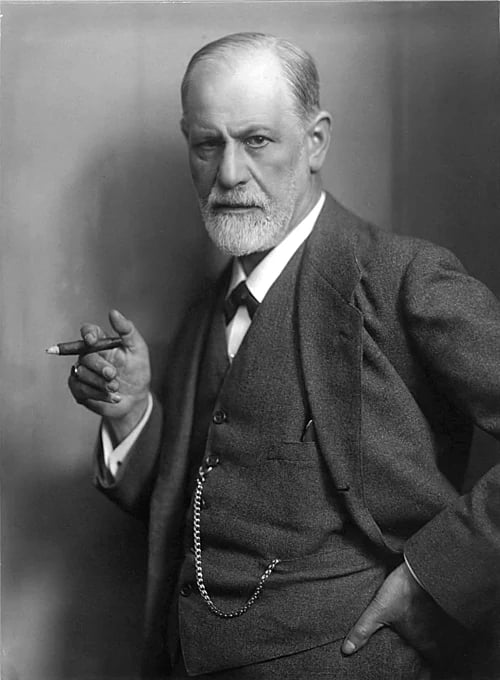
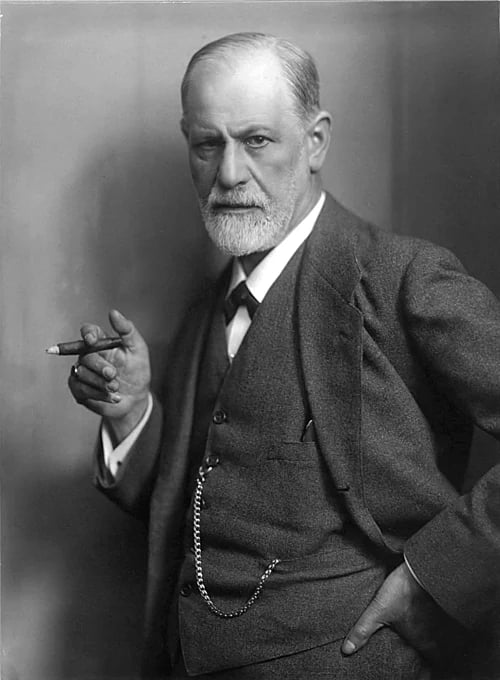
Would you be able to relax if this guy were trying to hypnotize you?
So how did hypnosis get such a bad rep? (Weird stage show hypnotists aside…)
The unfortunate truth is the main reason hypnosis has historically had a bad reputation is because of the opinion of only ONE rather (in)famous psychiatrist: Dr. Sigmund Freud.
You remember Freud, right? The doc who theorized about Freudian slips and anal retentiveness while writing articles proposing that cocaine was a cure for many mental and physical problems?
The guy best known for his theories that sexual drives are the basis of all human motivation?
I mean, yeah, sex is powerful. But so is money, love, and contributing to the greater good.
You see, way back in 1885…
Freud tried to use hypnosis on a handful of his “neurotic sexual female” patients. And it didn’t work.
So he gave hypnosis a bad rep (or is that “rap"?) …and started practicing “talk therapy” instead.
I don’t know about you, but the idea of Freud hypnotizing me wouldn’t make me feel comfortable. (Especially if I were one of his “neurotic sexual” female clients.)